


Unlocking the Secrets of a Key Autoimmune Target: GAD65
Adjust Professor Ashley Buckle is thrilled to share a new Nature Communications publication.
Dr. Buckle notes that:
“The human body is a marvel of balance, but sometimes, that balance is disrupted. One such case is type 1 diabetes, where the immune system mistakenly attacks insulin-producing cells in the pancreas. A key player in this autoimmune attack is GAD65—an enzyme essential for producing the neurotransmitter GABA. But why does GAD65 trigger such a response while its close counterpart, GAD67, does not?
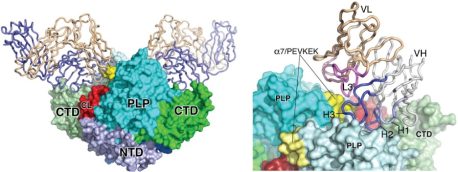
In our latest research, we explored the structure and dynamics of GAD65 and how it interacts with a specific autoantibody—an immune protein that mistakenly targets this enzyme. Using hydrogen-deuterium exchange mass spectrometry (HDX-MS), X-ray crystallography, molecular dynamics simulations and cryo-electron microscopy (cryo-EM), we uncovered a fascinating link between GAD65’s conformational flexibility (its ability to change shape) and its autoantigenicity (its likelihood of triggering an immune response).
Key Findings: GAD65’s shape-shifting nature makes it uniquely vulnerable to immune recognition—unlike its closely related counterpart, GAD67. The autoantibody binds in a way that bridges key structural elements, reinforcing the enzyme’s flexibility and potentially amplifying its immune recognition.
The presence or absence of its cofactor, PLP (pyridoxal-5’-phosphate), dramatically alters the enzyme’s stability and dynamics, suggesting a direct link between its biochemical function and its autoimmune targeting.
Why It Matters: For over three decades, scientists have known that GAD65 is a major target in type 1 diabetes, but the reasons remained unclear. Our findings provide a structural and dynamic explanation, shedding light on why the immune system sees GAD65 as a threat. Understanding this could open new doors for developing therapeutic strategies to prevent or slow autoimmune attacks.
This 15-year journey has reaffirmed why I love working with diverse, multidisciplinary teams—the biggest challenges demand the broadest perspectives. This work, led by Susanne Ständer, Cyril Reboul, and Sarah Le, was a collaboration between my previous lab at Monash University and the HDX team at the Department of Pharmacy – Københavns Universitet – University of Copenhagen, led by Kasper D. Rand, with incredible contributions from many international teams.
Check out the full paper here: https://rdcu.be/ecxKI