


Cannabis Use Moderates Methamphetamine- and HIV-Related Inflammation: Evidence from Human Plasma Markers
The Marcondes Lab: “Cannabis Use Moderates Methamphetamine- and HIV-Related Inflammation: Evidence from Human Plasma Markers,” MDPI
HIV continues to be a public health issue and an incurable chronic infection, despite the availability of antiretrovirals to change the fate from a fatal immunodeficiency. Yet, persons living with HIV (PWH) have a high incidence of co-morbid disorders that result from chronic inflammation, including neurological disorders. Importantly, HIV infection rates remain high among populations that use addictive substances, especially stimulants such as Methamphetamine (METH). METH further increases risk for cardio- and neurovascular pathology aggravating the effects of HIV. Importantly, METH users also use other drugs, being cannabis among the most common. Yet, little is known about how METH and cannabis interact with HIV to modify disease outcomes that can be tracked with biomarkers.
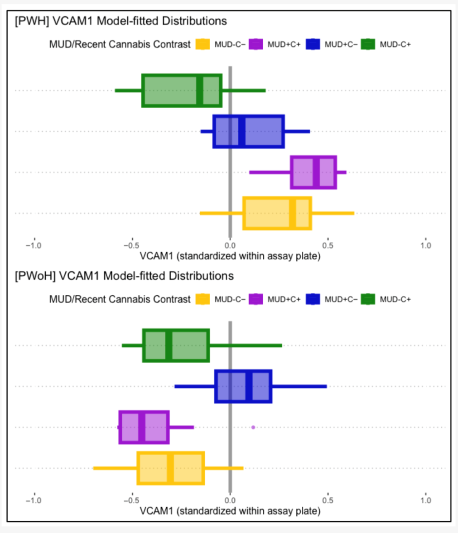
At San Diego BioMed, the Marcondes lab and the UCSD HNRC and Department of Psychiatry joined forces to examined potentially interacting associations of lifetime methamphetamine use disorder (MUD), recent cannabis use, and HIV with four plasma markers of immune and inflammatory functions. They applied statistical methods to data on plasma concentrations of four biomarkers that are reporters of leukocyte transmigration and vascular health, linked to neurocognitive disorders in PWH that are polysubstance users, CXCL10/IP-10, CCL2/MCP-1, ICAM-1, and VCAM-1. The study revealed that recent cannabis use was associated with lower levels of these biomarkers among PWH with lifetime METH use disorder, but only persons without HIV displayed cannabis-associated lower VCAM-1 levels, indicating protective effects in vascular health. The results suggested that cannabinoid pathways may be worthwhile clinical targets for treating sequelae of chronic inflammatory conditions such as the ones caused by HIV and METH use disorders. The Marcondes lab is invested in basic and translational science that will help populations of substance users to decrease rates of HIV infection and reverse the damaging effects of METH use. This is a real teamwork. And congratulations to the first author of the study, from SDSU/UCSD joint doctoral program, Dr. Jeffrey Rogers.
Learn and read the full manuscript @ https://doi.org/10.3390/v17081143